The benefits of schema markup, and why most sites miss out

Schema markup is how your website tells search engines, answer engines, and AI agents what is true about your business. It uses the schema.org vocabulary, written as JSON-LD structured data, to declare the facts they would otherwise have to guess from a page written for humans, not machines: your name and logo, the articles you publish, the products and services you provide, the topics on which you are expert, and where and when people can find you. Get it right and you earn more accurate AI citations, richer search results, and content your own site search and AI tools can use.
Sounds great, why don't digital leaders just do it?
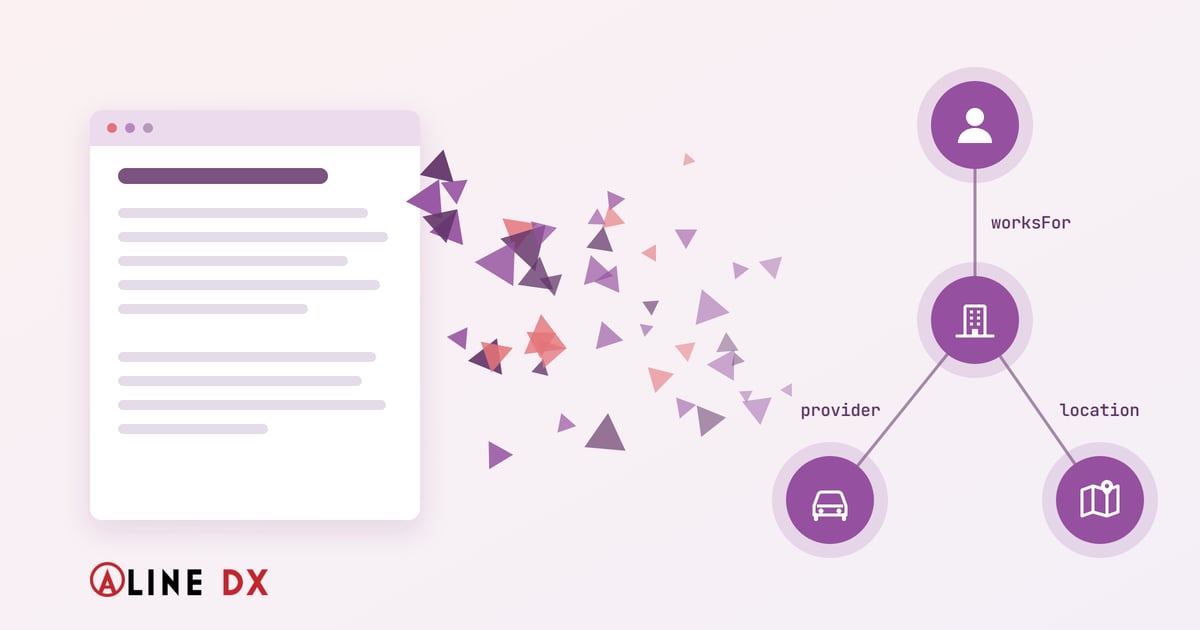
Most enterprise sites have some JSON-LD schema markup. Maybe a developer added an Organization block during the last rebuild, or an SEO agency put FAQ markup on product pages to feed rich snippets, but nobody really owns it, few people understand it, and until recently nobody looked at it again.
Now, digital leaders know structured data gives AI the context it needs to describe their business accurately. What they lack is a way to do it well, and the gap has two sides:
- StrategyWhat to mark up first, how the entities connect, and how to design your schema to suit your brand.
- TechnicalHow to implement it across every page and keep it current, without a developer ticket for every change.
Doing it properly has meant hiring expensive consultants (like me) to design it, then developers to hand code it, with a ticket, a validation check, and a release every time something changes. No wonder schema markup has mostly landed in the too-hard basket.
The evidence on how much schema markup lifts AI visibility is still coming in. My view is that most sites studied so far have partial markup, so they can only show partial results. The full benefit comes when markup is complete, correct, and current, on every public page of every site your brand owns.
That is the gap I set out to fill with Richard Hauer and Tim Stokoe of PING Works, a Sitecore Gold Partner and experienced Marketplace app developers. Working together, we have designed JSON-LD Schema Manager to put the strategy and the implementation in one place, for SitecoreAI.
What is JSON-LD schema markup?
JSON-LD schema markup is a small block of code on a web page that describes the page in a language machines understand. Search engines, answer engines, and AI agents read it to get the facts directly, rather than guessing from the page text.
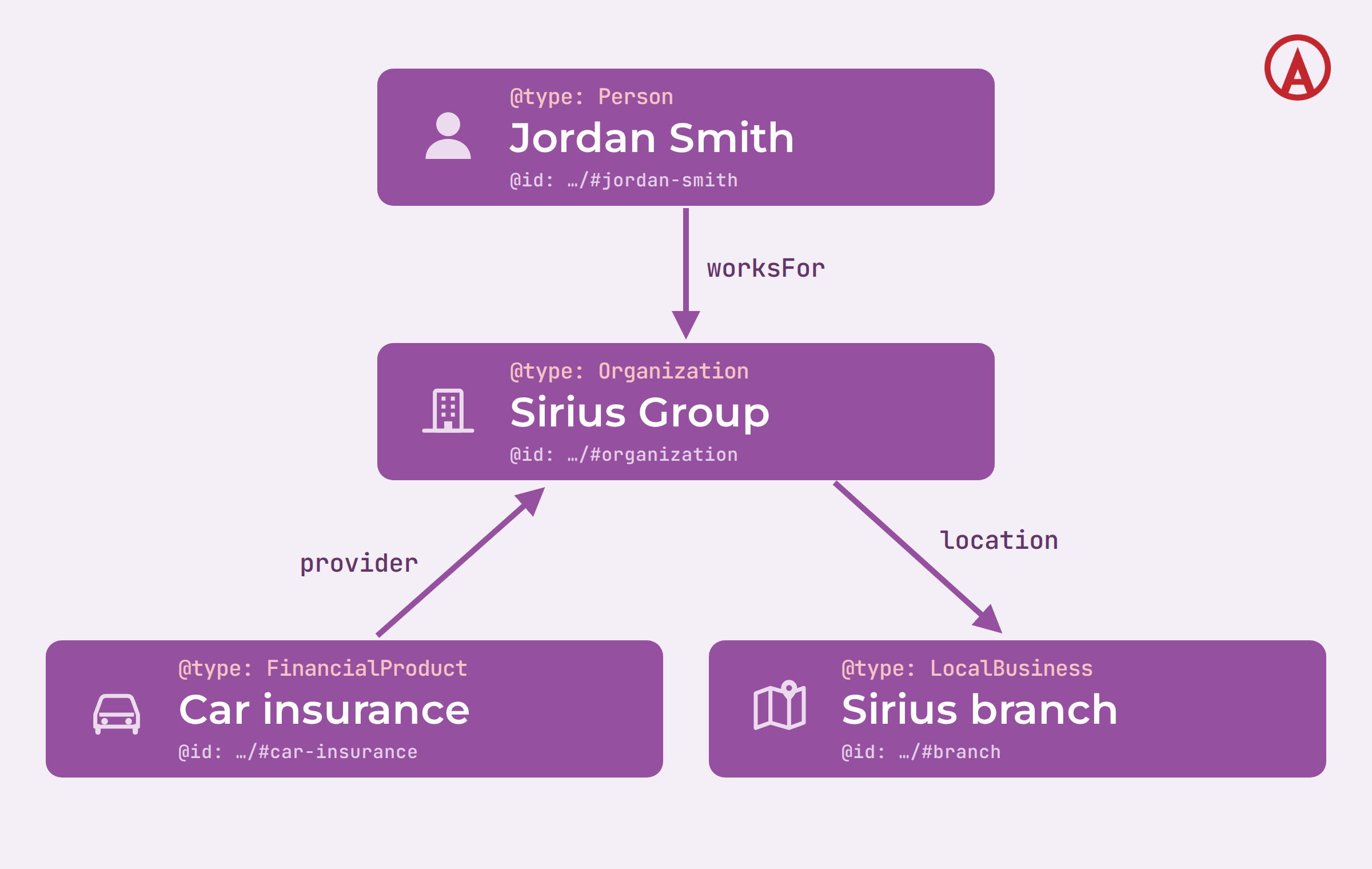
That language is schema.org, a shared vocabulary of types and properties. An Article has a headline, an author, and a datePublished, and an Organization has a name, a logo, and a url. If you're strategic, you go further:
DefinedTerms: Tag each article's subjects with terms from your own taxonomy, so machines read them as defined concepts instead of loose keywords.sameAslinks: Point your organisation and your authors to the profiles that prove who they are, such as LinkedIn, so there is no doubt which company or which person you mean.knowsAbout: Declare the topics your organisation and your experts know, which gives answer engines a reason to treat you as a source.Bonus tip: use the same taxonomy as yourDefinedTerms, and make that taxonomy align with the categories that your products or services belong to!
JSON-LD (JavaScript Object Notation for Linked Data) is the format those facts are written in. Your visitors never see it, but Google, Bing, the AI crawlers behind answer engines like ChatGPT and Claude, and your own site search all read it.
Getting it right is a core part of answer engine optimisation (AEO), which is about making sure the answers AI gives about your business are accurate. I first wrote about this in October 2025, in From brochureware to agentware: making your digital experience AI ready.
See the machine layer in action
Every Aline DX article has two layers: one for people and one for machines. It demonstrates three core schema tactics:
@typesays what each thing is: an article, an organisation, a person.- The properties repeat facts you can see on the page, such as the headline, author, and date.
- The
@idvalues connect this article to Aline DX, to me, and to my earlier writing, so machines see how everything relates.
Show machine layerHide machine layer
{
  "@context": "https://schema.org",
  "@graph": [
    {
      "@type": "BlogPosting",
      "@id": "https://alinedx.com.au/blog/the-benefits-of-schema-markup#post",
      "headline": "The benefits of schema markup, and why most sites miss out",
      "description": "Schema markup pays off in eight places, from AI citations to cleaner analytics. Here is what each benefit is worth, and why most enterprise sites miss out.",
      "url": "https://alinedx.com.au/blog/the-benefits-of-schema-markup",
      "datePublished": "2026-09-23",
      "dateModified": "2026-09-23",
      "inLanguage": "en-AU",
      "image": {
        "@type": "ImageObject",
        "url": "https://441935244.fs1.hubspotusercontent-ap1.net/hubfs/441935244/benefits-of-schema-markup-hero.png",
        "width": 2400,
        "height": 1260
      },
      "author": {
        "@id": "https://alinedx.com.au/#alison-sainsbury"
      },
      "publisher": {
        "@id": "https://alinedx.com.au/#organization"
      },
      "mainEntityOfPage": {
        "@id": "https://alinedx.com.au/blog/the-benefits-of-schema-markup#webpage"
      },
      "about": [
        {
          "@id": "https://alinedx.com.au/#topic-schema-markup"
        },
        {
          "@id": "https://alinedx.com.au/#topic-structured-data"
        },
        {
          "@id": "https://alinedx.com.au/#topic-json-ld"
        },
        {
          "@id": "https://alinedx.com.au/#topic-aeo"
        }
      ],
      "mentions": [
        {
          "@id": "https://alinedx.com.au/#topic-4ps"
        },
        {
          "@id": "https://jsonldschemamanager.com/#software"
        },
        {
          "@id": "https://www.ping-works.com.au/#organization"
        },
        {
          "@id": "https://www.ping-works.com.au/#richard-hauer"
        },
        {
          "@id": "https://www.ping-works.com.au/#tim-stokoe"
        }
      ],
      "citation": [
        {
          "@id": "https://alinedx.com.au/blog/making-your-digital-experience-ai-ready#post"
        },
        {
          "@type": "Article",
          "url": "https://luminwebsites.com/articles/structured-data-and-schema-markup-for-seo-and-aeo/",
          "name": "Structured data and schema markup for SEO and AEO",
          "author": {
            "@type": "Person",
            "name": "Lucian Chevallier",
            "sameAs": "https://www.linkedin.com/in/lucianchevallier/"
          }
        }
      ]
    },
    {
      "@type": "Person",
      "@id": "https://alinedx.com.au/#alison-sainsbury",
      "name": "Alison Sainsbury",
      "jobTitle": "DX Consultant & Founder",
      "url": "https://alinedx.com.au/about",
      "worksFor": {
        "@id": "https://alinedx.com.au/#organization"
      },
      "award": "Sitecore Strategy MVP 2026",
      "sameAs": [
        "https://www.linkedin.com/in/alisonsainsbury/"
      ],
      "knowsAbout": [
        {
          "@id": "https://alinedx.com.au/#topic-schema-markup"
        },
        {
          "@id": "https://alinedx.com.au/#topic-json-ld"
        },
        {
          "@id": "https://alinedx.com.au/#topic-aeo"
        },
        {
          "@id": "https://alinedx.com.au/#topic-content-structure"
        },
        {
          "@id": "https://alinedx.com.au/#topic-4ps"
        }
      ]
    },
    {
      "@type": "DefinedTermSet",
      "@id": "https://alinedx.com.au/#topics",
      "name": "Aline DX topics",
      "hasDefinedTerm": [
        {
          "@id": "https://alinedx.com.au/#topic-schema-markup"
        },
        {
          "@id": "https://alinedx.com.au/#topic-structured-data"
        },
        {
          "@id": "https://alinedx.com.au/#topic-json-ld"
        },
        {
          "@id": "https://alinedx.com.au/#topic-aeo"
        },
        {
          "@id": "https://alinedx.com.au/#topic-content-structure"
        },
        {
          "@id": "https://alinedx.com.au/#topic-4ps"
        }
      ]
    },
    {
      "@type": "DefinedTerm",
      "@id": "https://alinedx.com.au/#topic-schema-markup",
      "name": "Schema markup",
      "inDefinedTermSet": {
        "@id": "https://alinedx.com.au/#topics"
      },
      "description": "Code on a web page that describes its content using the schema.org vocabulary, so machines can read the facts directly."
    },
    {
      "@type": "DefinedTerm",
      "@id": "https://alinedx.com.au/#topic-structured-data",
      "name": "Structured data",
      "inDefinedTermSet": {
        "@id": "https://alinedx.com.au/#topics"
      }
    },
    {
      "@type": "DefinedTerm",
      "@id": "https://alinedx.com.au/#topic-json-ld",
      "name": "JSON-LD",
      "inDefinedTermSet": {
        "@id": "https://alinedx.com.au/#topics"
      },
      "alternateName": "JavaScript Object Notation for Linked Data"
    },
    {
      "@type": "DefinedTerm",
      "@id": "https://alinedx.com.au/#topic-aeo",
      "name": "Answer engine optimisation",
      "inDefinedTermSet": {
        "@id": "https://alinedx.com.au/#topics"
      },
      "alternateName": "AEO",
      "description": "Making sure the answers AI gives about your business are accurate."
    },
    {
      "@type": "DefinedTerm",
      "@id": "https://alinedx.com.au/#topic-content-structure",
      "name": "Content structure",
      "inDefinedTermSet": {
        "@id": "https://alinedx.com.au/#topics"
      }
    },
    {
      "@type": "DefinedTerm",
      "@id": "https://alinedx.com.au/#topic-4ps",
      "name": "4Ps of Digital Experience",
      "inDefinedTermSet": {
        "@id": "https://alinedx.com.au/#topics"
      },
      "alternateName": "4Ps of DX",
      "description": "Aline DX framework covering Platforms, People, Processes, and Planning.",
      "url": "https://alinedx.com.au/4ps-of-dx"
    },
    {
      "@type": "SoftwareApplication",
      "@id": "https://jsonldschemamanager.com/#software",
      "name": "JSON-LD Schema Manager",
      "url": "https://jsonldschemamanager.com/",
      "applicationCategory": "BusinessApplication",
      "operatingSystem": "SitecoreAI"
    },
    {
      "@type": "Corporation",
      "@id": "https://www.ping-works.com.au/#organization",
      "name": "PING Works",
      "url": "https://www.ping-works.com.au/"
    },
    {
      "@type": "Person",
      "@id": "https://www.ping-works.com.au/#richard-hauer",
      "name": "Richard Hauer",
      "sameAs": [
        "https://www.linkedin.com/in/richardhauer/"
      ]
    },
    {
      "@type": "Person",
      "@id": "https://www.ping-works.com.au/#tim-stokoe",
      "name": "Tim Stokoe",
      "sameAs": [
        "https://www.linkedin.com/in/tim-stokoe-maicd-79a46853/"
      ]
    }
  ]
}
This is a readable copy. The live JSON-LD sits in this page's code, where search engines and AI crawlers read it.
Eight benefits of schema markup
- AI mentions and citationsAnswer engines repeat what they can verify. Declared facts give them something reliable to cite, so they describe you accurately: the right product names, the right people, and current dates.
- Rich results in Google, Bing and beyondArticle, Event, and Organization markup unlock enhanced search results, such as your logo, dates, and event details. Privacy-focused search engines like DuckDuckGo draw most of their results from Bing, so your markup reaches their users too. It is the most measurable benefit, and the easiest to lose when markup goes stale.
- Sharper site searchWhen your own search engine is set up to read the same declared facts, type, author, date, and location can become filters and ranking signals instead of guesses from page text.
- Enabling your own AIChatbots, internal assistants, and retrieval tools read structured content first. The markup that helps Google also helps the assistant you are building for your customers or your staff.
- Fact controlYou decide which names, products, people, and dates machines repeat. Without markup, that decision is made for you by whichever crawler read the page last.
- Content governanceDesigning schema exposes the data your pages cannot supply, like the article template with no topic field or the office page with no opening hours. The gaps it surfaces become a content roadmap you did not have before.
- Re-use and personalisationStructured content travels. Once a fact is declared, it can be used across pages, channels, segments, and campaigns. Structure once, reuse everywhere.
- Cleaner measurementDeclared entities give analytics and attribution something solid to count. You can report by author, by product, or by location, instead of by a page bucket someone named in 2019.
Only one of the eight is about Google.The rest are about how your content behaves, inside and outside your site. That is why I treat schema markup as a content structure decision first.
What does good schema markup look like?
Use this as a quick diagnostic on your own site, organised by my 4Ps of Digital Experience: Platforms, People, Processes, and Planning. Every line should be a yes.
Platforms
- Markup is generated from page templates and rendered into the HTML every visitor receives, so crawlers that skip JavaScript still see it.
- Types and properties are validated against schema.org and the Google Rich Results Test before publish.
People
- Marketers own the facts, and can change a mapping without a ticket, a sprint, or a release.
- Someone is accountable for it, with a review date in the diary.
Processes
- Values come from fields marketers already fill in, so markup stays current as content changes.
- Changes to schema.org and Google's rules are checked on a regular cycle.
Planning
Organization,WebSite, andWebPageshare one@idper entity on every page, so the graph joins up.- There is a written view of what to mark up next, and why.
How do you start improving your schema markup?
- Make a gap list.Run your top twenty pages through Google's Rich Results Test and the Schema Markup Validator. Record what is present, what is wrong, and what is missing. This takes an afternoon and it is usually sobering.
- Fix Organization and @id first.One correct
Organizationblock, referenced by the same@idon every page, is the highest-value first fix you can do. - Pick one template and do it properly.Articles are the usual choice. Map every property to a template field, publish, validate, and measure. Then move to the next template.
SitecoreAI customer? Get the strategy, without the tickets
JSON-LD Schema Manager is a SitecoreAI Marketplace app that lets a marketing team build, map, and publish schema.org JSON-LD across the whole site with no code. Around 30 blocks arrive ready to use, with the strategy built in. Each property is mapped once to a field on the page template or a fixed value, and Sitecore renders the result into the page every visitor receives. The configuration lives in your own tenant, so your data, your IP, and your infrastructure stay yours.
It is coming to the SitecoreAI Marketplace in Q4 2026. Register your interest at jsonldschemamanager.com and claim a complimentary 20-minute session on your own site's structured data.
If you are running Sitecore XM or XP and want this on your site, please do get in touch. Demand from self-hosted Sitecore customers will help us bring it to you sooner.
If you are on another platform, the checklist above still applies, and the Content with Context program covers the strategy in full, and will be running again shortly.